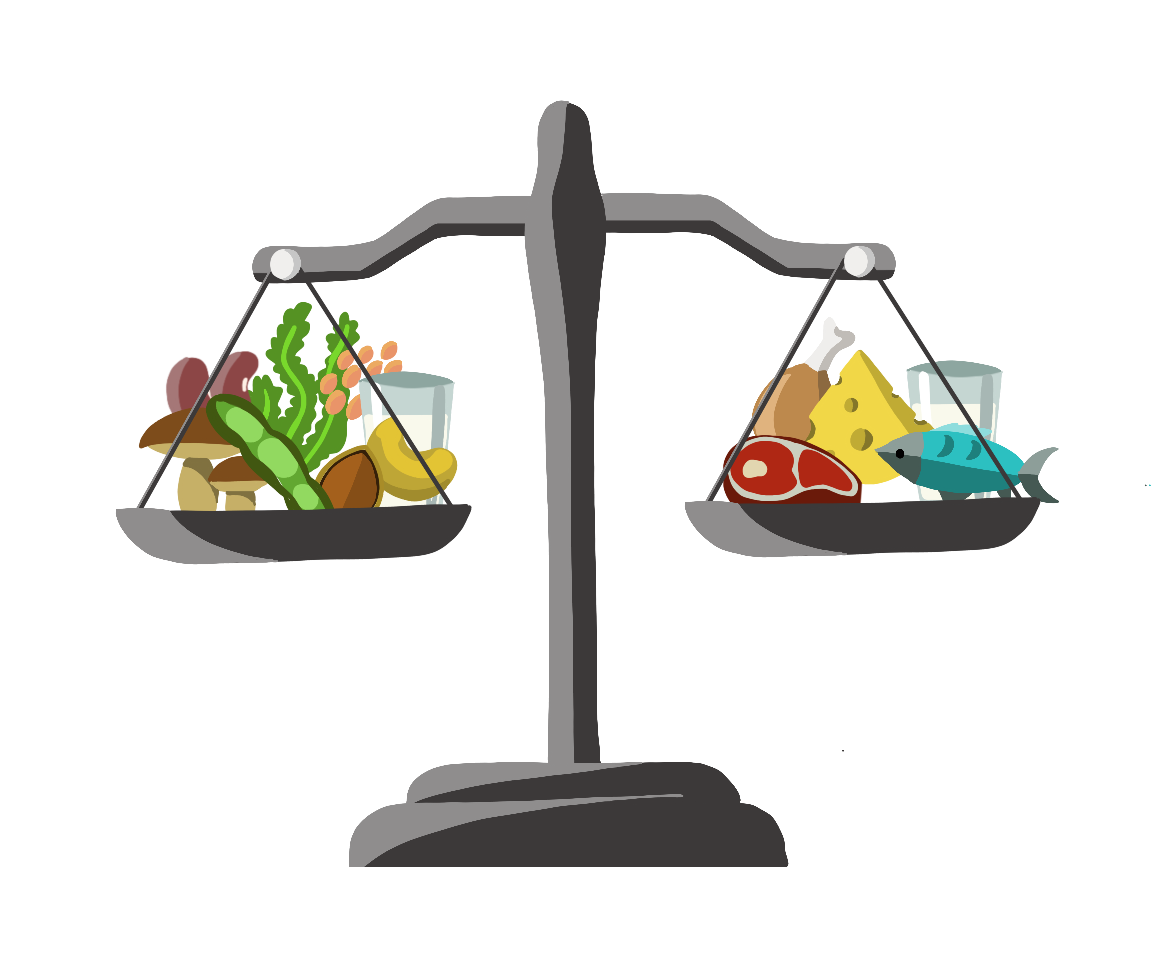
The Protein Tracker
The measurement method that helps achieve a better balance between plant-based and animal protein. The Protein Tracker methodology is used in the Netherlands and abroad by supermarkets, caterers, suppliers, hospitals, and other food providers.


The Protein Tracker methodology was developed by the Green Protein Alliance and ProVeg to give supermarkets and foodservice companies insight into the ratio between animal and plant-based protein.
Measurements
Every year, the Green Protein Alliance and ProVeg publish a report, together with supermarkets and contract caterers, on the national protein split. View the latest supermarket report below.
Methodology
The Protein Tracker methodology maps out the ratio between animal and plant-based protein across the total volume of the full assortment. For supermarkets this is based on sales; for foodservice companies, on purchasing. Read the methodology per sector below.

National protein split
Share of animal and plant-based protein, by sales channel.
National protein split supermarkets
National protein split foodservice: contract caterers
How do we measure this?
The Protein Tracker methodology is used by every company that sells or purchases products containing animal and plant-based protein. Would you like to calculate your own protein split as a company? Get in touch with the Green Protein Alliance or ProVeg before you get started. The process consists of four steps.
-
1
Calculation
After an introduction and briefing, the organisation independently gets started on the data inventory according to the Protein Tracker methodology.
-
2
Validation
Experts from the Green Protein Alliance and ProVeg validate the data to confirm that the protein split has been calculated correctly according to the Protein Tracker methodology.
-
3
Publication
Once validation is complete, the split is published and communicated as measured in accordance with the Protein Tracker methodology.
-
4
Annual repetition
The measurement is repeated and published every year, so progress remains visible and can be tracked over time.
Organisations working with The Protein Tracker
Supermarkets









Foodservice


Partners and other organisations


 English
  Dutch
Dutch